
For players in the logistics industry, document processing is a persistent bottleneck that silently drains margins. Among the mountain of paperwork required to move cargo from point A to point B, the packing list acts as the ultimate source of truth for exactly what is sitting inside a shipment. However, the physical lifespan of a paper packing list is approaching zero.
Today, digital packing lists are instant and highly durable for compliance. But while a PDF might not tear or fade in the physical sense, digitizing this massive document introduces a much more insidious threat: severe data decay as information moves between siloed systems.
To maintain velocity, your operations need a way to instantly extract and lock down packing list data without relying on rigid, outdated technology that brings back manual work when suppliers change their layouts.
The hidden costs of unstructured shipment data
Compounding the friction for your operations teams is the structural reality of global trade. The exporter prepares the document based on standard commercial practice, which means no specific form is required by the European Commission or other global authorities.
Every time a human operator manually extracts a line item from a PDF to paste it into a TMS, ERP or a customs declaration system, the risk of data decay multiplies. A transposed digit in a product code or a misaligned decimal point in the gross weight might seem like a minor typo, but in the context of international trade, it triggers a chain reaction of delays. This loss of data integrity results in held cargo, costly terminal storage fees, and even result in costly customs penalties and trigger a permanent loss of trust with your partners.
To prevent these errors in the first place, let’s look at the active phases of a shipments lifecycle in which we track the timeline of a packing list.
Tracking the packing list across the shipment lifecycle
A packing list typically survives an active operational window of 3 to 60 days from origin departure to final delivery in which it must remain accurate and actionable at every single touchpoint.
| Shipment phase | Timeline | Operational reality for the packing list |
| Origin to carrier | 1 to 7 days | The exporter prepares the original list and at least one copy to accompany the commercial invoice. Forwarders rely on this initial data to orchestrate container loading, terminal delivery, and initial transport.
Errors can lead to shipment rejection at the terminal, container roll-overs, and extra fees for origin warehouse storage or re-palletizing. |
| Ocean / Air / Rail transit | 1 to 45 days | The document is transmitted digitally as data is pre-processed for arrival notices, manifest submissions, and partner invoicing.
In this critical phase, errors create a mismatch in the carrier’s digital systems, which can lead to missed transshipment connections or trigger expensive manifest correction fees before the cargo even arrives. |
| Customs clearance | 1 to 5 days | Customs brokers rely on the list’s exact line items to assess taxes and clear the cargo. When a packing list is incorrect or mismatches the physical cargo during this phase, customs will stop clearance immediately. This triggers a chain of mandatory physical inspections, financial penalties, or even rejected entry where the shipment is rerouted to the origin at the owner’s expense. |
| Final destination | 1 to 7 days | Warehouse teams use the data for deconsolidation, checking received items against the stated cargo. In case a shipment arrives short, lost, or broken, receivers rely on the packing list to investigate physical discrepancies with the carrier or file insurance claims.
Incorrect information causes immediate delays in warehouse put-away and complicates the resolution of cargo claims. |
| Legal archival | 5 to 10 years | Long after the cargo is delivered, the digital document becomes a highly durable asset for post-entry customs audits and legal compliance. While EU member states align closely on a 10-year rule for customs and tax compliance, some general commercial correspondence rules may apply a 5 to 6 year requirement, making 10 years the safest benchmark for complete audit readiness. |
Essentially, the document never really dies. Long after the cargo has reached its final destination, the digital footprint must remain pristine for regulatory audits.
Overcoming operational friction with agentic AI
Throughout this long journey, accuracy is non-negotiable. To solve these bottlenecks, your operations need technology that understands logistics data contextually. Here’s where Intelligent Document Processing differentiates itself from traditional OCR.
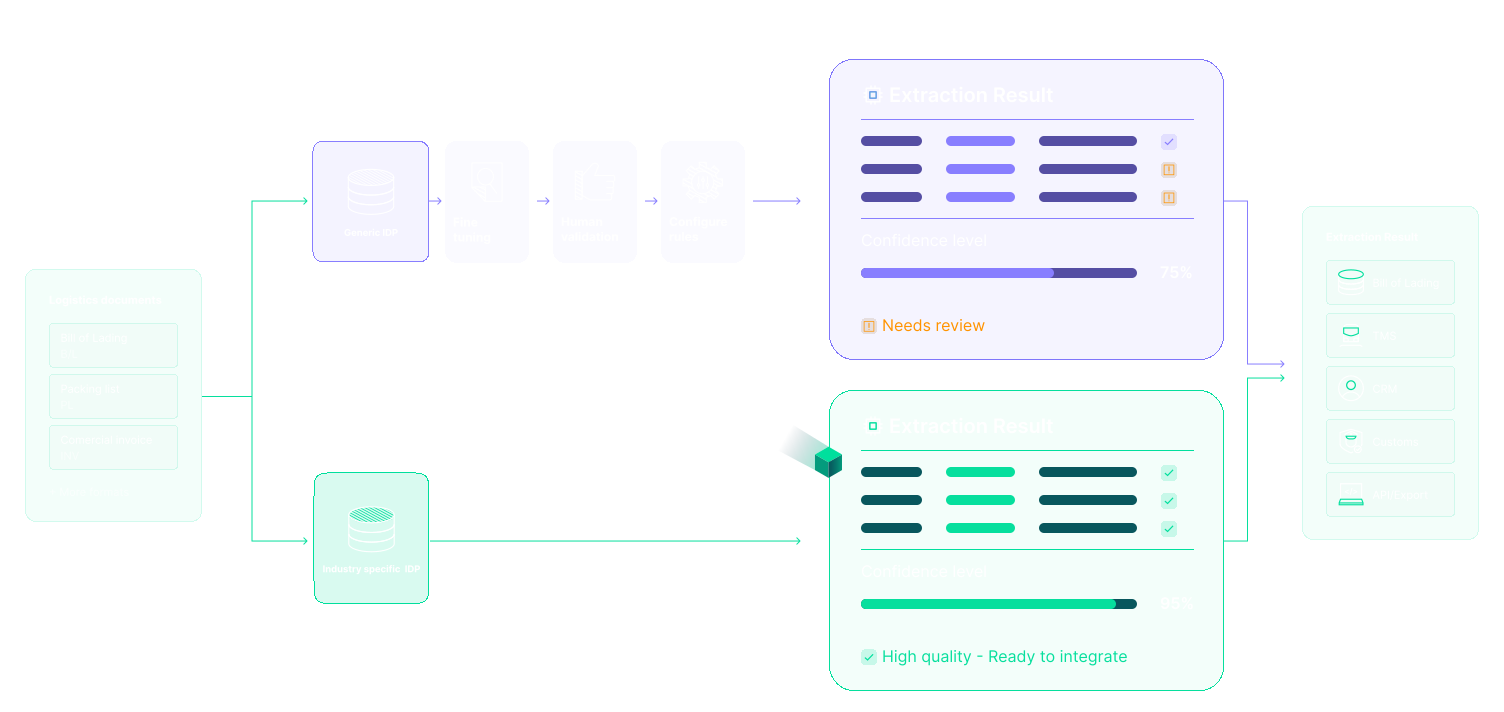
While creating an OCR template seems logical for a major supplier’s packing list. The moment the supplier changes the layout, the template breaks, the data extraction fails, and your operators are thrown back into manual data entry.
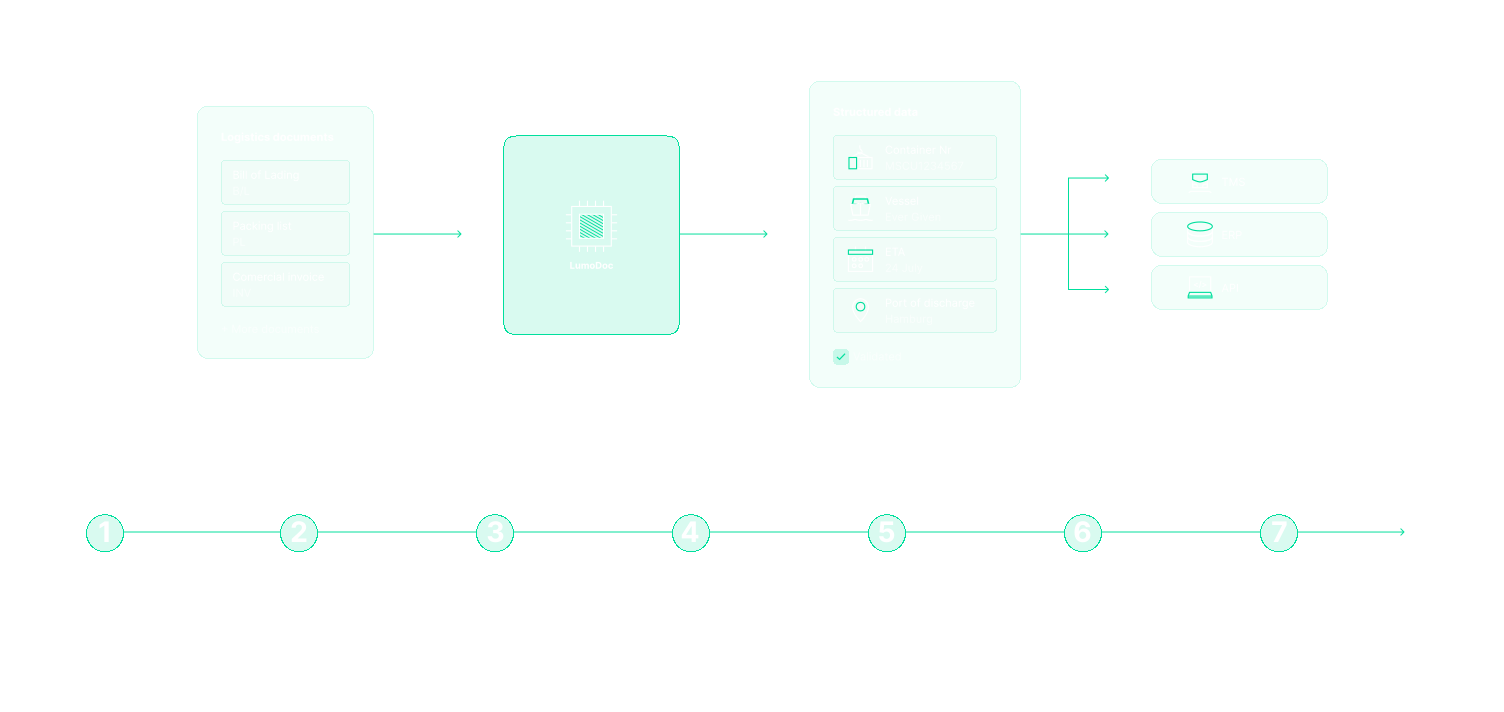
To solve these bottlenecks, FortoLabs engineered LumoDoc, an Intelligent Document Processing ecosystem built specifically to handle the immense complexity of logistics paperwork.
Rather than relying on brittle, rules-based templates, LumoDoc natively resolves layout variations. It reads contextually, meaning it understands the data on the page regardless of where it is positioned. By understanding the logistics domain inherently, LumoDoc extracts documents with over 95% baseline accuracy straight out of the box.
When your teams no longer have to manually scroll through long packing lists to hunt for HS codes, your operations transform. Accurate system data leads directly to faster delivery times, fewer customs delays, and a vastly reduced risk of missing or damaged items during final deconsolidation.
Benchmark your current manual processes against agentic AI, and see how easily you can eliminate extraction errors and accelerate your customs clearance.