
The transportation and logistics industry stands at the edge of a major technological shift. Every day, operations leaders hear that artificial intelligence will revolutionize supply chains, streamline transport planning, and predict disruptions before they happen. Yet, despite the non-stop industry chatter, actual enterprise-level adoption remains surprisingly slow.
Logistics leaders want the operational speed and cost reductions that AI promises, but they regularly run into severe implementation barriers.
In this article, we take a step back to look at the current state of AI in the logistics industry and why adoption is stalling across the sector. You will also discover the first steps it takes to integrate AI with a clean data foundation in your organization to protect your operations from recurring errors.
Let’s dive into the world of AI in logistics.
Where AI already plays a crucial role in logistics
Before dissecting the barriers to widespread adoption, it is important to acknowledge where artificial intelligence is already actively reshaping the industry. When deployed in highly structured environments, AI tools can deliver massive operational improvements.
Currently, leading organizations rely on machine learning algorithms for predictive demand forecasting, allowing warehouse managers to anticipate inventory surges before they happen. Advanced route optimization software actively reroutes fleets around sudden weather events or traffic congestion, saving fuel and transit time. Inside the four walls of the distribution center, AI drives automated sorting robotics and vision-picking systems, drastically accelerating fulfillment speed.
Today, capabilities have also reached our ports. At the Port of Rotterdam, AI systems analyze historical data, weather, and ship characteristics to predict arrival times, while autonomous terminals use AI-driven control systems and automated guided vehicles to move cargo without human drivers.
These applications prove that the technology works. However, the adoption of these tools across the fragmented reality of global freight forwarding reveals severe implementation hurdles. Moving data across isolated organizational silos is vastly different from optimizing a single warehouse floor.
What the data says about AI adoption barriers
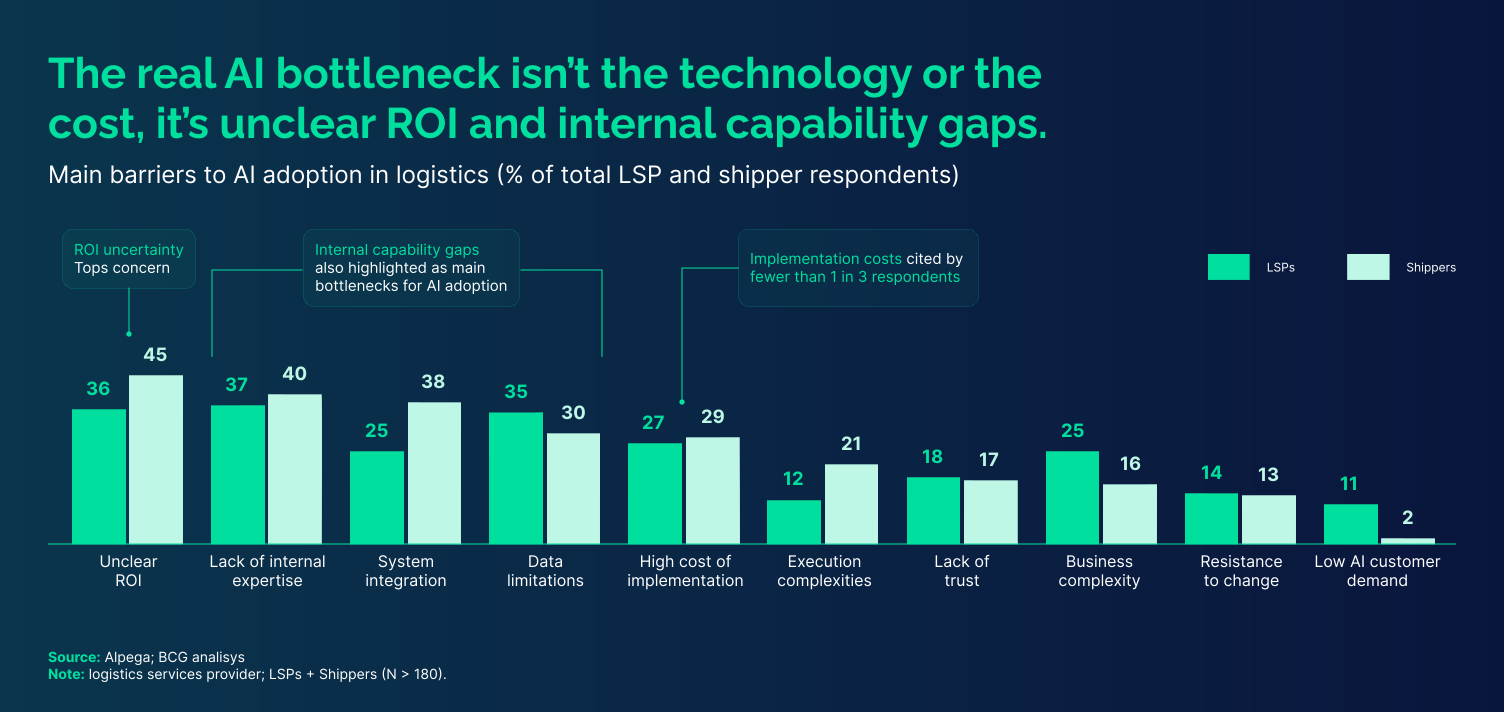
As the logistics sector looks to AI to bridge the gap between raw unstructured data and actionable control, expectations are shifting. According to a 2025 survey on AI logistics adoption by Boston Consulting Group, the industry is eager for transformation, even if widespread implementation is still a work in progress.
There is a stark disconnect between market demand and successful execution. While 40% of shippers now expect logistics service providers to offer AI-enabled transport planning and visibility.
Logistics providers are struggling to deploy these tools effectively: Only one in ten providers currently reports a measurable financial impact from AI, with most remaining stuck in the exploration phase.
So, what is holding the industry back?
1. Unclear ROI
Interestingly, both service providers and shippers express less hesitation regarding technical complexity. The primary barrier to AI adoption is an unclear return on investment (ROI). While there might be potential to improve efficiency, costs of implementation remain high for first movers.
2. System integration
The BCG survey also highlighted several internal capability gaps. 38% of shippers see system integration as a top 3 bottleneck preventing adoption. Logistics operates within a highly fragmented system landscape where partners use isolated platforms which often fail to communicate or integrate with each other. This leads to extensive integration processes, often taking months. A new tool is only valuable if it can seamlessly communicate with your existing infrastructure.
3. Implementation costs
Almost half of small organizations cite high upfront costs as a barrier, though they still rank execution concerns and capability gaps higher. Meanwhile, only 25% of larger players view costs as a primary hurdle. Upgrading the infrastructure is more than just the steep software licensing fees. The financing of cleaning, structuring, and consolidating fragmented legacy data into usable pipelines closely aligns with the hurdle of integrating new systems.
Organizations rarely face just a single barrier. Looking closer at these few examples shows how complex the logistics industry really is and how interconnected these challenges truly are.
How to ensure success with the right AI solutions
Understanding how to transition from data visibility to automated decision making requires deep operational context. When dealing with complex global supply chains, there are very few decisions that can be simply broken down to rigid, rule-based systems.
To ensure success with AI, clearly defining your organization’s problem is a must before choosing the right technology, rather than adopting AI for its own sake. Running for long-term success depends on a strategy built on three pillars:
- Thorough preparation: Map out the exact operational bottlenecks you need to solve.
- Analyze workflows: Trace how data moves to identify repetitive or error-prone tasks.
- Monitor continuously: Establish oversight to ensure the system adapts to changing real-world conditions.
Let’s see how this has already been implemented in the real world.
Building AI for the real world
To understand the barrier of industry complexity, we can look at the real-world journey of Forto, a digital freight forwarder. When Forto developed Flash, an advanced agentic AI system, their goal was to help internal logistics experts generate booking proposals and execute decisions faster. By testing and refining AI within the grueling environment of active freight forwarding, they discovered exactly what operations teams require to reduce their workload safely.
However, their implementation revealed a crucial industry lesson: agentic AI is the future, but it does not bring acceptable results without clean data. Before advanced AI agents like Flash could be widely adopted, the underlying data quality had to be delivered first.
This realization led to the launch of FortoLabs in 2025 as Forto’s AI-native SaaS platform. By actively testing and validating the technology in real-life logistics challenges, FortoLabs now provides AI tools that enable industry actors to become more efficient and deliver better service quality, starting with the AI-powered document processing tool LumoDoc.
LumoDoc and the foundation of clean logistics data
Before you can leverage AI for advanced transport planning or forecasting, you need a flawless foundation of digital information. Data entry is widely considered one of the absolute first things to automate in logistics. If the system starts working with information that is incorrect from the ground up, every subsequent decision will be flawed.
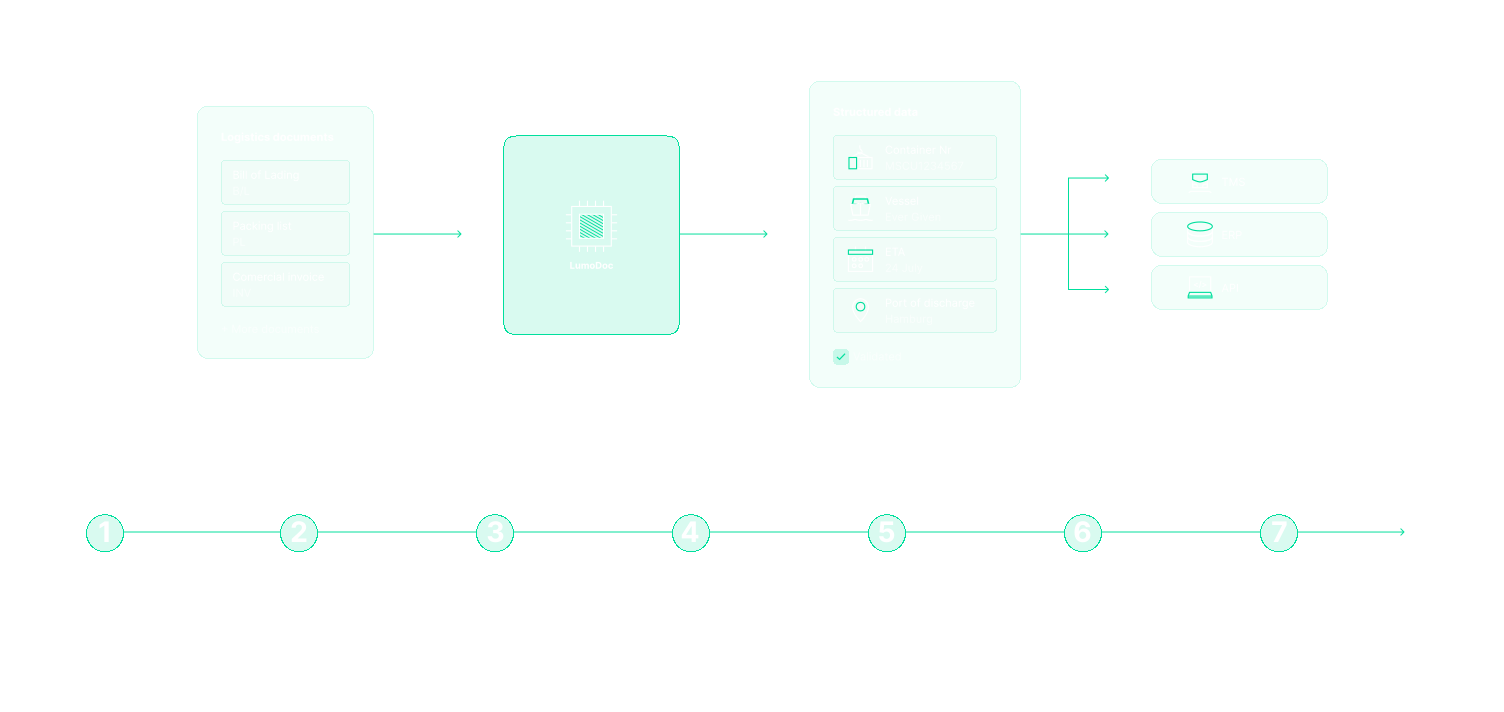
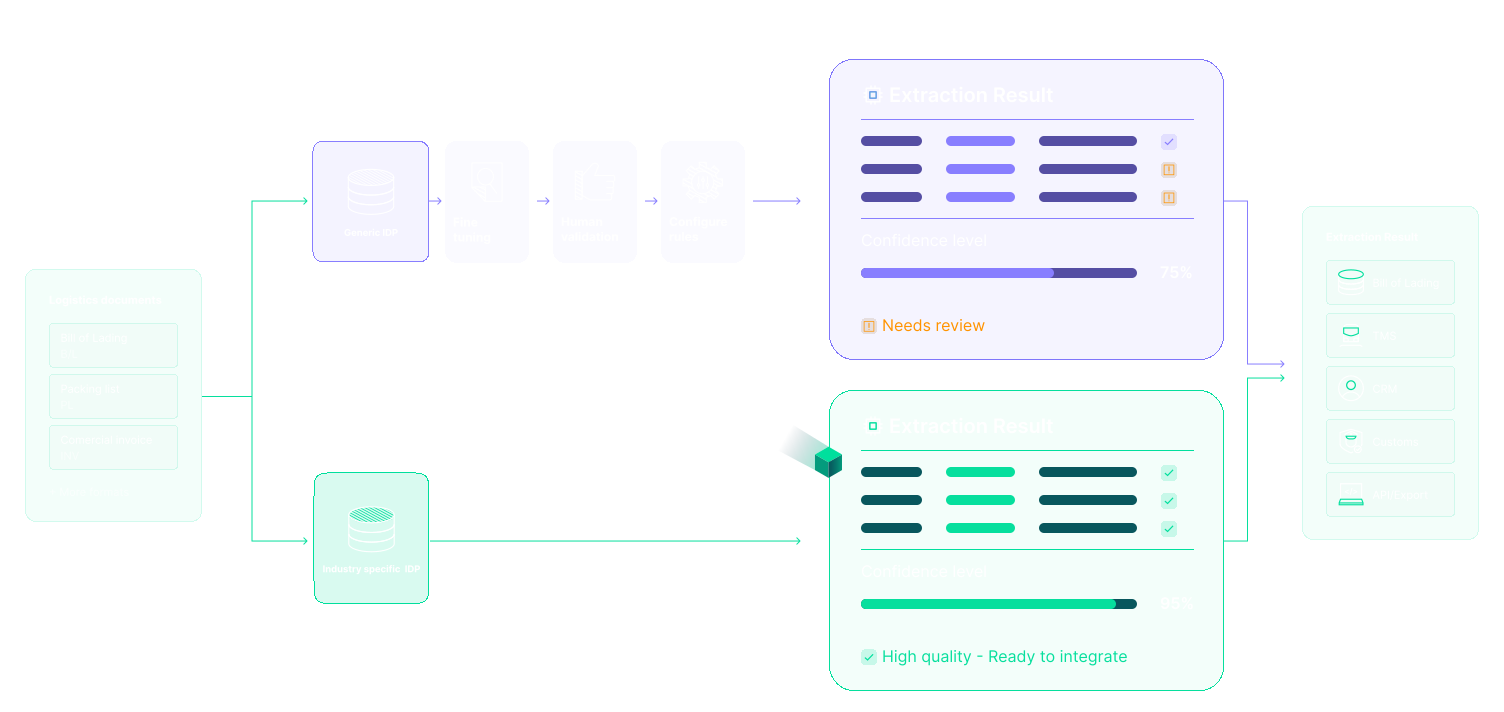
This is where LumoDoc enters the equation. LumoDoc is our intelligent document processing solution designed specifically for logistics workflows. It tackles the root of administrative inefficiency by reading, categorizing, and extracting data with 95% accuracy across every major document type in the supply chain such as Bills of Lading, Arrival Notices, Packing Lists and more.
1. Proven ROI from day one
To help organizations visualize the tangible financial impact of implementing AI, we created a dedicated logistics document processing ROI calculator. This tool allows you to see exactly what LumoDoc adds to your bottom line and what you can save by automating your document processing.
2. Seamless system integration into your current infrastructure
To remove this hurdle, our team at LumoDoc provides customers with a straightforward integration process with minimal setup effort required from your team. You can see exactly what to expect in our step-by-step guide to intelligent logistics document processing in your company.
3. Reduced implementation costs without complex processes
To keep integration costs low, our plug-and-play design allows you to configure required data points in your systems’ preferred format on your own, syncing data directly into your operational systems via seamless API integrations or webhooks.
Starting your journey with AI the right way
AI opens completely new doors for the digitalization of supply chains. However, it must be approached intentionally with clear guardrails. Otherwise, you end up with just another dashboard that creates more work for your operations team instead of reducing it.
As data entry is widely considered one of the absolute first things to automate in logistics, with FortoLabs we provide you with years of research and technological development which is now being brought to the market. By automating the most manual, error-prone administrative tasks first, you give your operational teams the clean data foundation they need to manage exceptions, lower costs, and deliver superior service quality.
Discover more about what’s driving FortoLabs