
Every shipment generates a stack of paperwork. Bills of lading, packing lists, customs declarations, and freight invoices pile up relentlessly. For a mid-sized freight forwarder or customs broker it translates to hundreds of documents arriving by email every single day.
Each one needs to be opened, read, categorized, and keyed into a TMS or ERP by hand. This keeps manual processes slow, error-prone, and expensive, often directly eroding a shipment’s profit margins.
This is exactly why, even if it doesn’t sound fancy, the adoption of AI has to be done from the ground up with a human-in-the-loop system that catches exceptions before they corrupt downstream workflows.
Let’s dive into the hidden costs of manual data entry in your supply chain and explore how your operations can reclaim those lost hours using the technology of today.
Costs draining your logistics operations
Manual data entry is still a reality for a high number of companies, usually caused by a lack of internal expertise, the integration of modern technology into legacy systems and elevated costs of implementation.
However, by picking the right tool to automate these manual processes, companies can significantly reduce costs in the long-term.
The expenses divide into three distinct categories:
The direct costs of document handling
These are the hard numbers sitting on the table during the extraction process. You can directly calculate your direct costs by measuring how much time an employee spends processing a single document, multiplying it by your annual document volume, and factoring in the average hourly wage of your Full-Time Equivalent (FTEs).
Annual direct costs = minutes spent to process a document * documents processed annually * (average hourly wage ÷ 60)
The rework costs of errors
When errors occur during document handling, it results in fixing single data entry mistakes, such as a transposed tracking number. As manual logistics processes always carry a baseline error rate, this results in hidden costs of manual data entry.
The hidden costs of manual data entry
Beyond the immediate labor costs, manual data entry creates a waterfall effect of operational friction. Typos lead to inventory mismatches, slow data entry delays booking processing, and a lack of supply chain visibility ultimately disrupting customer satisfaction, finally resulting in opportunity cost.
Where the time of logistics operators is actually going
On average, a person takes 10 minutes just to transcribe a single document. This includes downloading the document, extracting all the relevant information, and entering the data in your systems.
If you multiply that by your monthly document volume and the hourly wage of your team, you quickly understand the massive budget being spent on repetitive transcription work that doesn’t require human judgment.
Here you can estimate your final ROI by factoring in the efficiency gains of automation and your first-year cost per document:
Your results
LumoDoc can help you save an annual amount of:
Hours
Euros
This translates into a ROI of:
3 ways to reduce manual data entry in your supply chain
Before adopting a solution, operators must recognize that yesterday’s tech cannot solve today’s logistics challenges. Old-school logistics solutions are rapidly falling behind because they are inherently rigid and offer low flexibility, driving up high maintenance costs. Furthermore, they consistently present accuracy challenges, suffer from slow response times that can leave teams waiting up to hours for data extraction, and apply a one-size-fits-all approach with limited customization.
To solve these bottlenecks, supply chain leaders typically look at three distinct strategies:
- Automated exchange of information: Setting up direct interfaces (like EDI or API) between systems, partners, and customers allows for seamless data flow. While highly effective, this often requires the acquisition of external IT strategy consulting and individual software development. It also assumes your partners have the technical maturity to integrate with you.
- ERP system integration: Connecting your core ERP with other platforms can streamline operations, such as enabling automated invoice matching. However, building your own technology with internal resources takes significant time, and internal developers often map a new supplier template, only for the supplier to change their layout three weeks later.
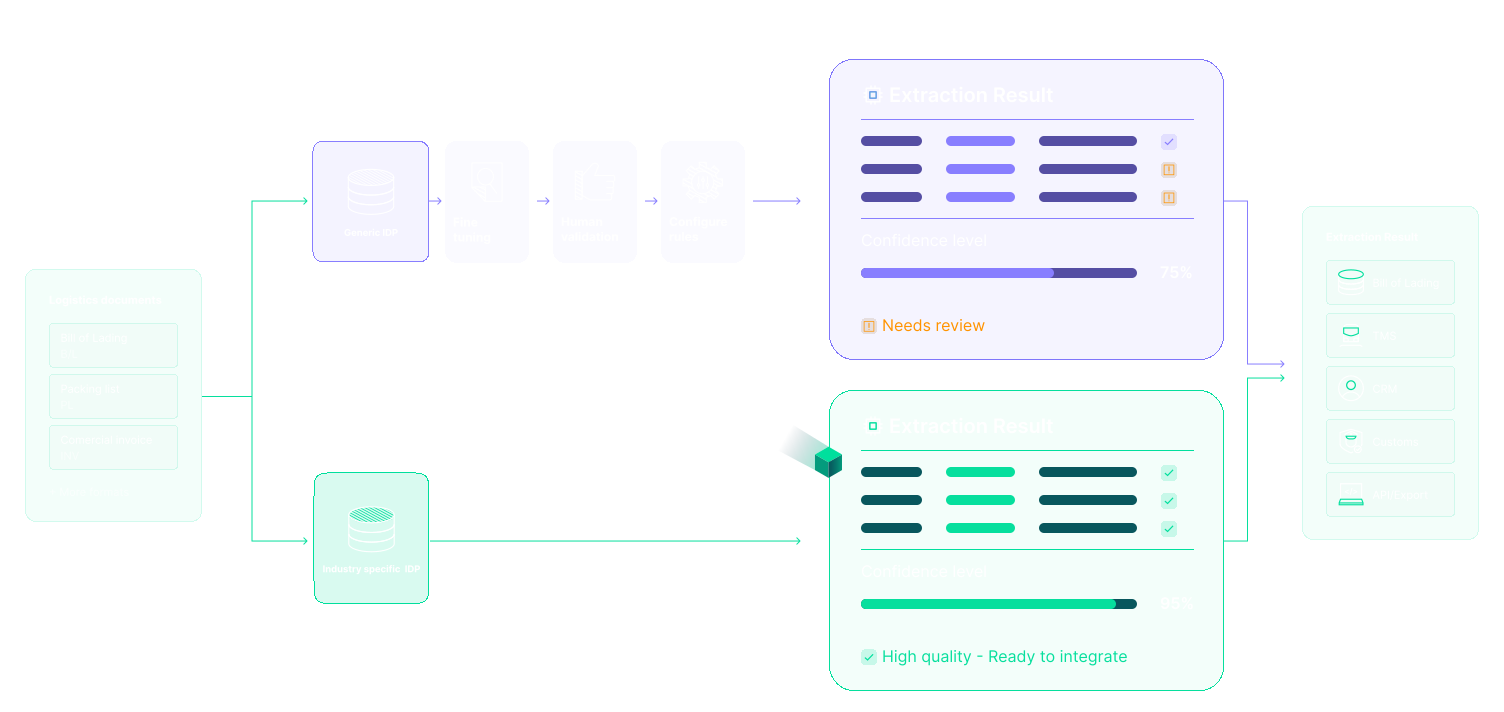
- Start from the baseline with IDP: The most practical way to eliminate the bottleneck is to tackle the unstructured data with systems that learn and act autonomously (agentic AI). By deploying an Intelligent Document Processing solution, you can automate the extraction of data from the PDFs and emails that already flood your inbox, without forcing your partners to change how they operate.
Reclaiming lost hours with IDP
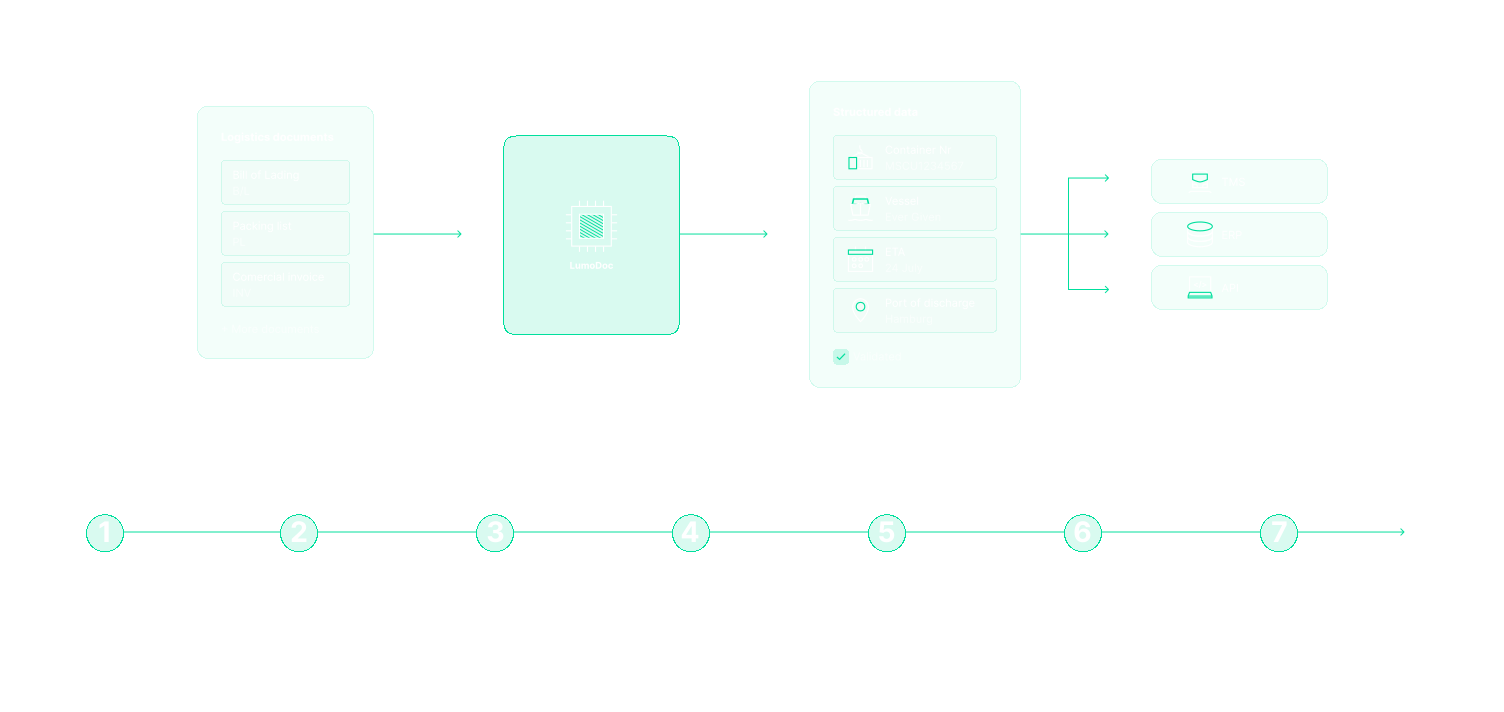
Instead of trying to force every supplier into strict data templates, modern freight operations need a system that adapts to reality. This is where LumoDoc steps in to transform how IDP supports logistics document handling.
LumoDoc is an ecosystem-native agentic AI platform designed to eliminate the friction of legacy workflows. When a supplier alters a layout or a release note arrives in a completely new format, LumoDoc reads the context just like a human operator would to defeat schema drift natively.
With IDP you can transfer the focus of your operators from acting as human data pipelines, to managing exceptions and free up time to provide the exceptional service that drives growth and trust with your customers.
Discover how LumoDoc processes your most complex logistics documents.